DEAE-Cellulose, also known as Diethylaminoethyl-cellulose is widely used in varied process like ion exchange chromatography, protein chromatography and anion exchange media. Also it is used to separate lipids found in plasma membrane microdomain sites. Those who want to study acute myocardial infarction know its importance very well.
DEAE-Cellulose has been used to isolate glycans from intestinal mucus in order to study transcriptional responses to avian or mammalian intestinal mucus from different host species. This cellulose has also been used to purify tannase isoforms from the fungus A.
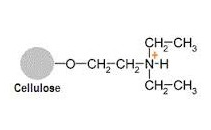
How DEAE –Cellulose Chromatography Works
Anion-exchange chromatography is a kind of process that aid to separate substances based on their charges using an ion-exchange resin containing positively charged groups such as diethyl-aminoethyl groups. Anion exchange resins will bind to negatively charged molecules, displacing the counter-ion.
SERVALYT™ Carrier Ampholytes are low molecular weight molecules of zwitterionic character. They are derived synthetically and comprise a multitude of varying pI-values. In agarose and polyacrylamide gels containing ampholytes, a linear pH-gradient will be built up on applying an electric field – the ampholyte molecules. With a net charge, it easily migrates in the electric field between the electrodes as long as they reach to the position of equivalent pI.
Some of their mesmerizing features include:
• Stop moving and form plateaus
• High resolution because of multimeric composition
• Fast staining and destining times
• Clear background associated with very low unspecific binding of dyes and stains
• High solubility in- trichloroacetic acid
• Almost no interaction with metal ions
All SERVALYTY are well suited to prepare any gel for isoelectric focusing made of polyacrylamide or agarose. The common concentration ion may range of 3% to 5%. For economical use, you can use technical grade SERVALYT™ carrier ampholyte pH 4-9. Gels can be prepared in glass tubes or in horizontal gel format (After completion, format of IEF gel is cut into strips applied to the second dimension). SERVALYT™ 3-10 IsoDalt is best suited to 2D-electrophoresis. And SERVALYT™ ampholytes are also suited for rehydration of dry IPG gel strips in 2DGE. It is also applicable to medium-free IEF system.
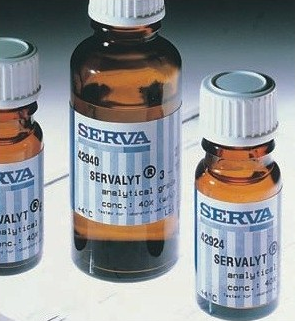
Benefits of SERVALYT™ Carrier Ampholytes
SERVALYT™ carrier ampholytes are produced according to the highest quality standards and areroutinely tested for performance. There are many criteria which contribute to excellence of separation: linearity of the gradient formed by the ampholyte throughout a gel, good conductivity at the isoelectric point and consistent staining characteristics. Overall performance is judged by the final pherogramm.
• High resolution due to multimeric composition
• Fast staining and destaining times
• Clear background associated with very low
• Unspecific binding of dyes and stains
• High solubility in trichloroacetic acid
• Fast removal of ampholytes during fixation
• Virtually no interaction with metal ions
So in order to achieve good separation of protein brands by IEF, stable pH-gradients with extensive and consistent buffer capacity are required.
View source: https://medium.com/@biophoretics.com/how-deae-cellulose-chromatography-works-da6937b12d9c